
Table of Contents
ToggleSpace technology has transformed how humans understand and interact with the universe. From the first satellites in the 1950s to today’s reusable rockets, this field continues to push boundaries. Engineers, scientists, and private companies now work together to make space more accessible than ever before. This article explores the key innovations driving modern space exploration, examines how these advances affect daily life, and looks ahead to what the future holds for humanity beyond Earth.
Key Takeaways
- Space technology has evolved from government-led programs to a global enterprise involving private companies, universities, and international collaborations.
- Reusable rockets from SpaceX, Blue Origin, and Rocket Lab have cut launch costs by up to 30%, making space more accessible than ever.
- Satellite constellations like Starlink now provide global internet coverage, connecting millions in remote areas where traditional infrastructure isn’t practical.
- Space technology powers everyday essentials including GPS navigation, weather forecasting, medical innovations, and financial system timing.
- Future advances in space technology include lunar bases, Mars missions, asteroid mining, in-space manufacturing, and expanding space tourism opportunities.
The Evolution of Space Technology
Space technology has come a long way since the Soviet Union launched Sputnik 1 in 1957. That small satellite sparked a global race to explore beyond Earth’s atmosphere. The United States responded with its own space program, and within 12 years, astronauts walked on the Moon.
The early decades focused on government-led missions. NASA and other space agencies built massive rockets, sent probes to distant planets, and established space stations. These efforts required enormous budgets and carried significant risks. The Space Shuttle program, which ran from 1981 to 2011, represented a major step forward in creating partially reusable spacecraft.
Today, space technology development includes both public and private sectors. Companies like SpaceX, Blue Origin, and Rocket Lab have changed the economics of getting to orbit. They’ve introduced new manufacturing techniques, advanced materials, and software systems that reduce costs dramatically. A launch that once cost hundreds of millions of dollars can now happen for a fraction of that price.
This shift has opened space to more participants. Universities launch small research satellites. Startups test new propulsion systems. International cooperation on projects like the International Space Station shows what’s possible when nations work together. Space technology no longer belongs exclusively to superpowers, it’s becoming a truly global enterprise.
Key Innovations Driving Modern Space Exploration
Several breakthroughs in space technology have accelerated progress in recent years. These innovations make missions cheaper, faster, and more capable than previous generations could have imagined.
Reusable Rockets and Launch Systems
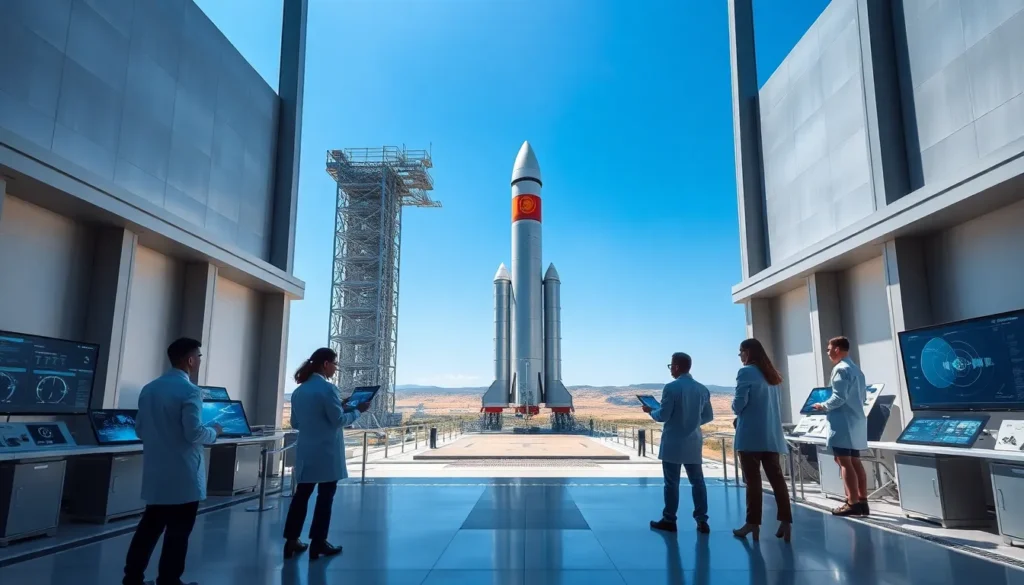
Reusable rockets represent one of the most significant advances in space technology history. SpaceX’s Falcon 9 rocket can land itself after delivering payloads to orbit. The company has now flown individual boosters more than 20 times each. This reusability cuts launch costs by up to 30% compared to expendable rockets.
Blue Origin and other companies pursue similar goals. Their New Shepard and New Glenn vehicles incorporate reusable components. Rocket Lab recovers and refurbishes its Electron rocket boosters using helicopters. Each successful recovery proves that throwing away expensive hardware after one use no longer makes sense.
The Starship system from SpaceX aims for full reusability. Both the booster and spacecraft are designed to return and fly again. If successful, this could reduce the cost of reaching orbit to under $100 per kilogram, a dramatic decrease from historical prices.
Satellite Technology and Communications
Modern satellites do far more than their predecessors. They’re smaller, smarter, and more numerous. CubeSats, standardized small satellites, have democratized access to orbit. A university research team can build and launch one for under $100,000.
Satellite constellations like Starlink and OneWeb aim to provide global internet coverage. SpaceX has already launched over 5,000 Starlink satellites and serves millions of customers. This space technology brings connectivity to remote areas where traditional infrastructure isn’t practical.
Earth observation satellites track climate change, monitor agriculture, and assist disaster response. Their sensors capture images with resolution measured in centimeters. Companies analyze this data to help businesses make better decisions about supply chains, urban planning, and natural resource management.
Communication satellites have also improved dramatically. They now handle higher data rates with lower latency. This matters for everything from video calls to financial transactions that cross continents.
How Space Technology Impacts Everyday Life
Space technology affects daily life in ways most people don’t notice. GPS navigation relies on a constellation of satellites orbiting Earth. Without them, smartphone maps, ride-sharing apps, and delivery tracking wouldn’t exist. Farmers use GPS-guided tractors to plant crops with centimeter-level accuracy.
Weather forecasting depends heavily on space technology. Satellites monitor storm systems, track hurricanes, and measure atmospheric conditions. This data saves lives by giving communities time to prepare for severe weather. Meteorologists now make accurate predictions five days out, something impossible before the satellite era.
Medical advances often trace back to space research. Memory foam, originally developed for spacecraft seats, now appears in mattresses and medical equipment. Water filtration systems designed for astronauts help communities access clean drinking water. Infrared ear thermometers came from technology used to measure the temperature of stars.
Space technology also supports financial systems. Banks and stock exchanges rely on atomic clocks aboard GPS satellites to timestamp transactions. Without this precise timing, high-frequency trading and international money transfers would face serious challenges.
The environmental monitoring capabilities of satellites help scientists track deforestation, ocean temperatures, and air quality. This information shapes policy decisions and helps organizations respond to environmental changes. Space technology has become essential infrastructure for modern civilization.
The Future of Space Technology
The next decade promises remarkable advances in space technology. NASA’s Artemis program aims to return humans to the Moon and establish a permanent presence there. This effort will test technologies needed for eventual Mars missions.
Private companies plan ambitious projects beyond Earth orbit. SpaceX continues developing Starship for interplanetary travel. Blue Origin works on lunar landers. Smaller companies focus on asteroid mining, space tourism, and orbital manufacturing.
Space technology for propulsion is advancing rapidly. Ion engines, nuclear thermal rockets, and solar sails could dramatically reduce travel times to distant destinations. These systems would make missions to Mars and the outer planets more practical.
In-space manufacturing presents exciting possibilities. Microgravity environments allow production of materials impossible to create on Earth. Companies experiment with making fiber optic cables, pharmaceuticals, and metal alloys in orbit. As launch costs fall, these space-made products could become economically viable.
Space tourism is already a reality for wealthy individuals. As costs decrease and capacity increases, more people will experience microgravity and see Earth from above. This could shift public attitudes toward space exploration and increase support for ambitious missions.
Artificial intelligence plays a growing role in space technology. Autonomous systems guide rovers on Mars and help satellites avoid collisions. Machine learning analyzes vast amounts of data from telescopes and sensors. These tools make missions more capable and reduce the need for constant human oversight.


